
The best basement flooring suits both the concrete below it and the life happening above it. A finished basement in Northeast Ohio might become a family room, office, or guest space. Yet conditions below ground still shape the choice. Water resistance at the surface is only part of the decision. This guide compares practical floors by moisture needs, comfort, care, and installation so you can choose with fewer costly assumptions.
Check What Is Happening Below the Finished Floor First
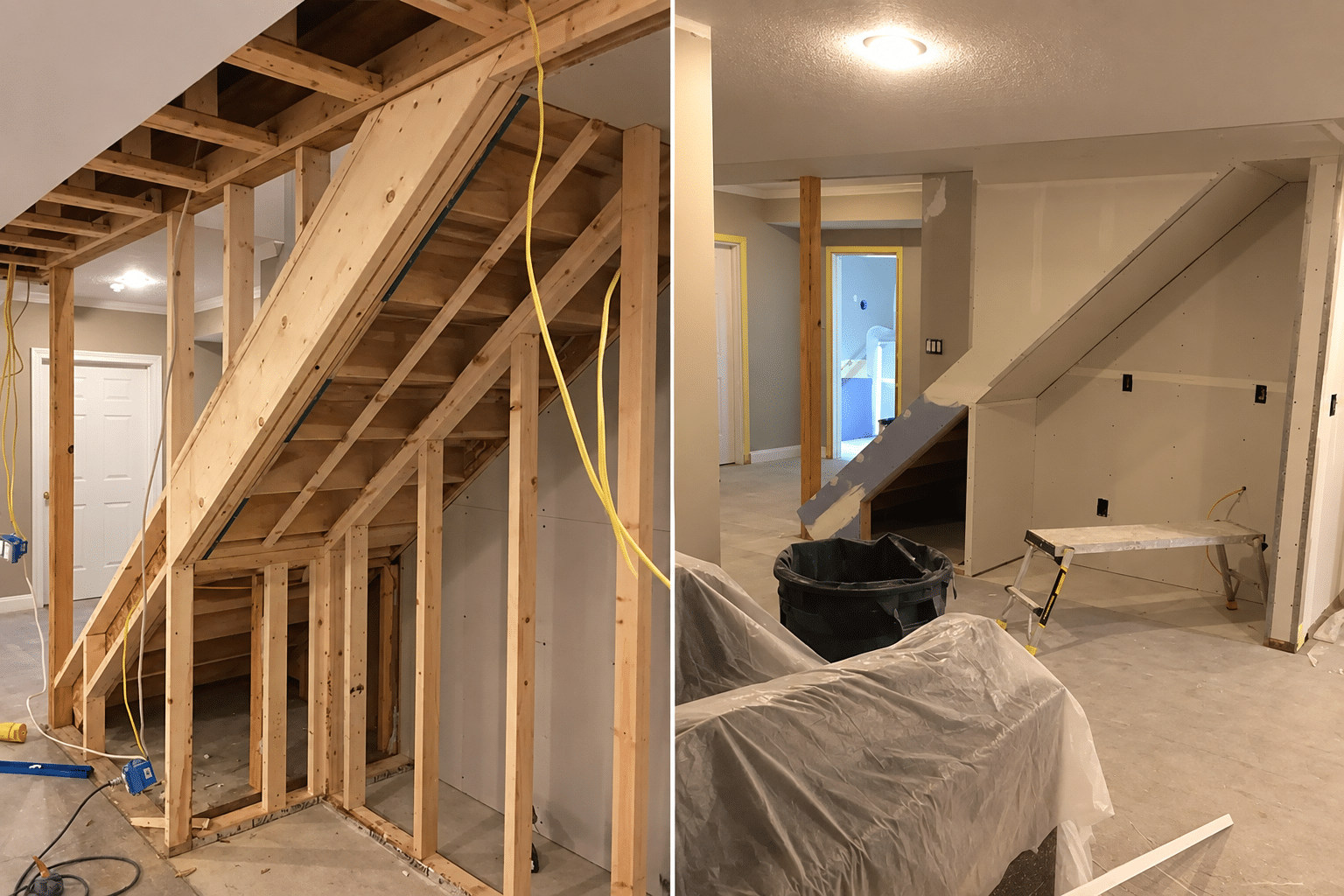
Before comparing colors or plank widths, learn how moisture behaves in the basement. Flooring cannot correct an active leak, drainage problem, or unresolved water entry.
Basement moisture can appear in several ways. Humid air may create condensation. Water vapor can move through a concrete slab without leaving a visible puddle. A plumbing leak or water entering after heavy rain is a different problem. Address it before a finished floor covers the evidence.
Check the room’s history for signs of moisture, such as staining, white mineral deposits on concrete, musty odors, damaged baseboards, or lifting flooring. Note areas where water may enter, including exterior doors, floor drains, snow-covered boots, or utility equipment.
The order is simple: resolve active water, assess the slab, confirm the product’s below-grade requirements, then choose the finish. A box labeled “waterproof” can resist water at the product surface. It does not waterproof the basement or protect everything below the seams.
Comparing Top Basement Flooring Options and Tradeoffs
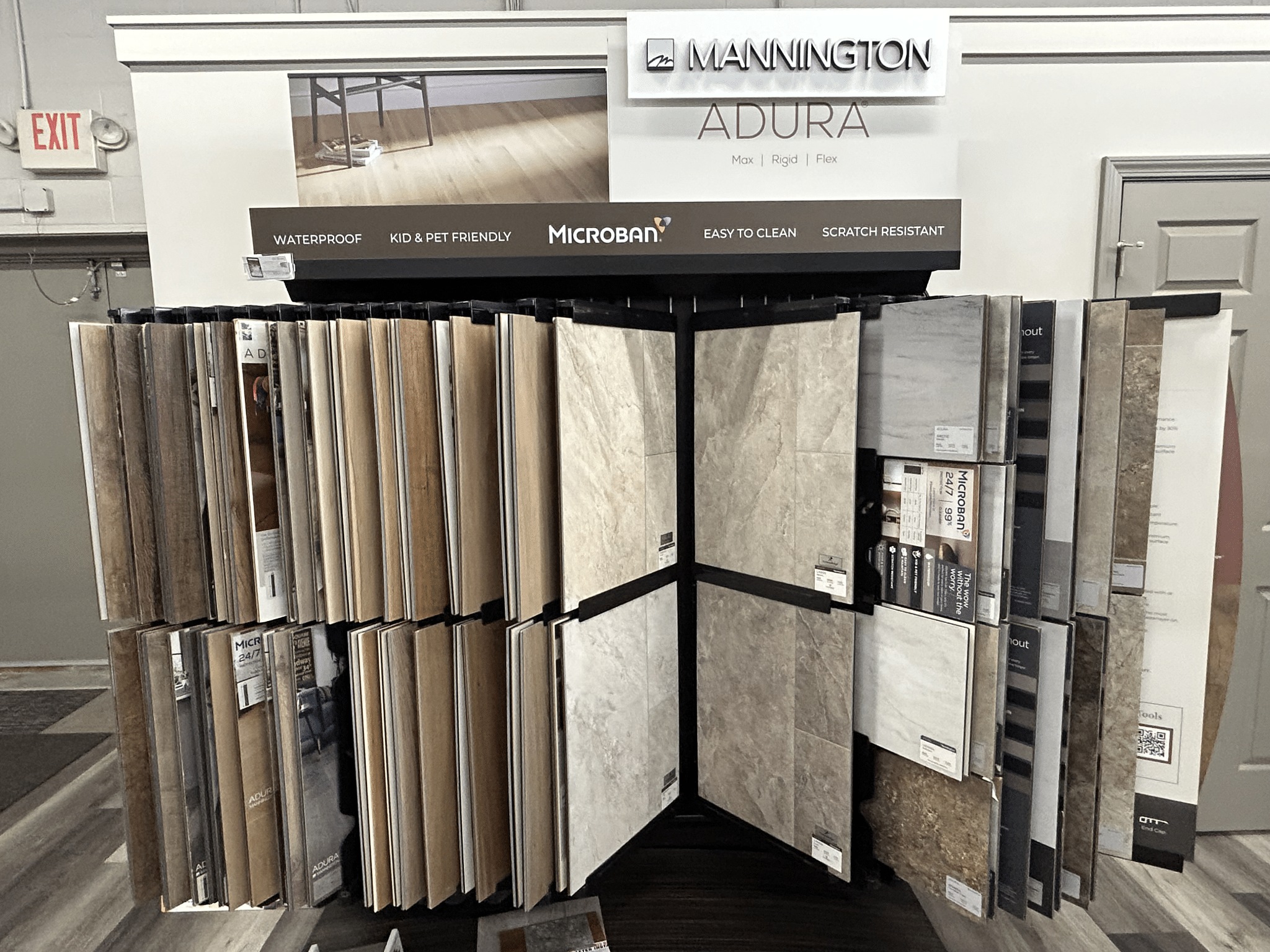
No single material wins every basement. These options earn their place by solving different combinations of moisture exposure, comfort, appearance, and upkeep.
Luxury Vinyl Plank or Tile
Luxury vinyl is a common basement choice because many products resist water at the surface and offer wood, stone, or tile looks. It feels warmer and quieter than ceramic or porcelain tile, especially with a suitable underlayment.
The word “waterproof” needs context. Water can still move through perimeter gaps or seams, become trapped below the floor, or affect baseboards and walls. The slab must meet flatness and moisture requirements. Confirm that the exact product and installation system are approved for below-grade use.
Porcelain or Ceramic Tile
Tile handles routine surface water well and can be a practical choice near an exterior entry, wet bar, bathroom, or utility area. It also offers broad design flexibility.
The tradeoff is comfort. Tile feels harder and may feel cooler underfoot, while grout requires cleaning and care. Tile itself is not a moisture solution for the concrete below it.
Carpet
Carpet adds warmth, softness, and sound absorption. Those qualities can make a finished basement feel more like a family room or guest area than a utility space.
It is best considered after the basement has a dry, managed history. A water event can require quick removal and may damage the carpet, pad, or materials below. Carpet tile can make localized replacement easier in some projects, while broadloom gives a more continuous feel. The right option depends on the room and installation conditions.
Laminate and Engineered Wood
Some laminate products are rated for below-grade installation and offer improved surface water resistance. Some engineered wood products may also be approved for a basement with the right subfloor and moisture-control system. Neither category should be treated as universally suitable.
Read the manufacturer’s current installation instructions and warranty for the exact product. Solid hardwood is generally a poor fit below grade because seasonal moisture movement can affect the boards. If a wood look is the priority, luxury vinyl, suitable laminate, or carefully specified engineered wood may offer a more realistic path.
You can review Dover’s flooring product options after moisture and room use have narrowed the field.
Match the Floor to How the Basement Will Be Used
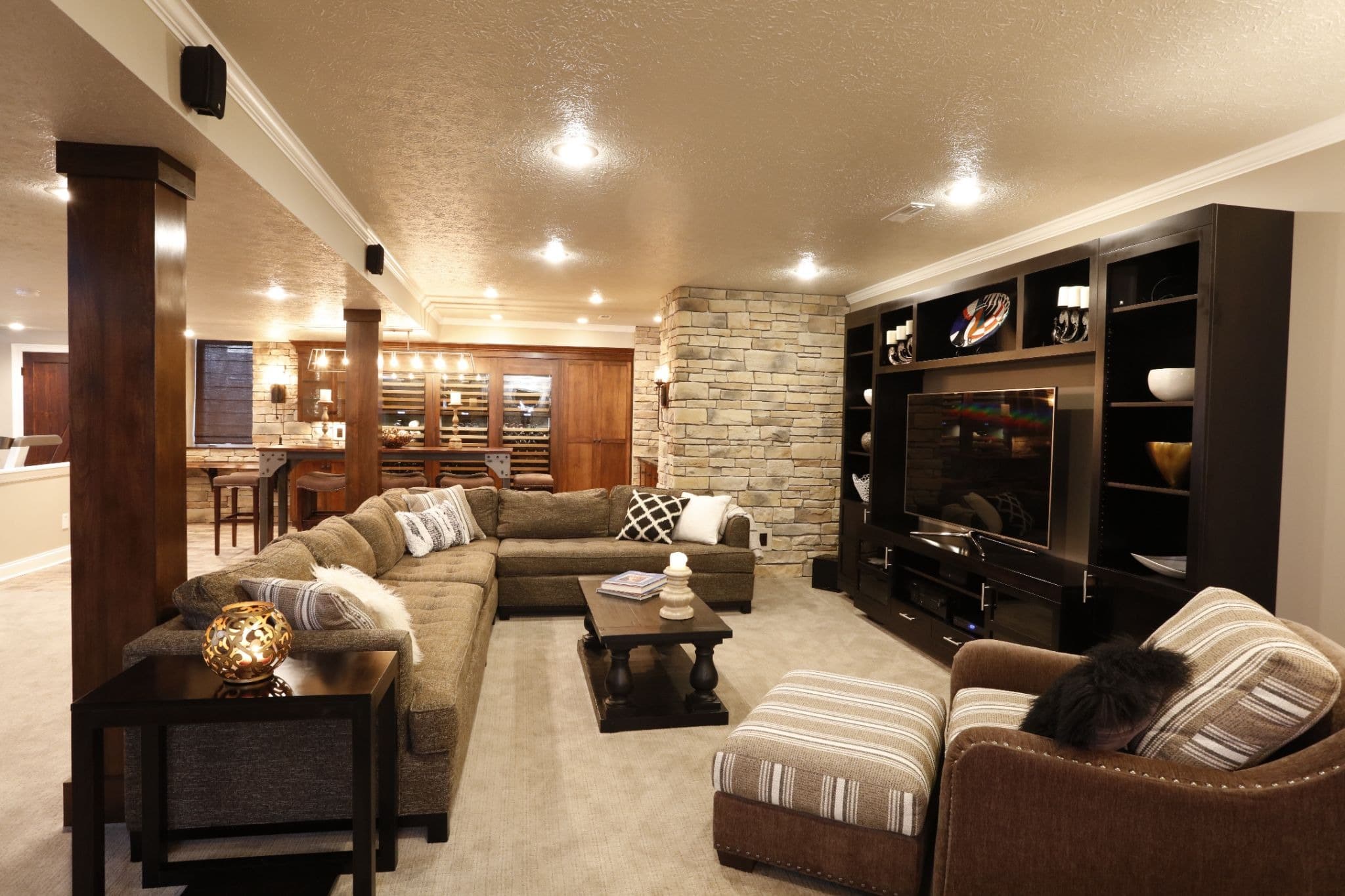
Once the floor suits the slab, daily use becomes the tie-breaker.
Family Rooms and Play Areas
Comfort, sound control, and easy cleanup carry more weight in spaces where people sit on the floor or children play. Carpet can soften sound and footsteps in a dry basement. Luxury vinyl can simplify cleanup after snacks, crafts, or muddy shoes. An area rug can add softness without committing the entire room to carpet.
Guest Areas and Home Offices
A guest space should feel settled and comfortable, while an office needs to support a chair, desk, and frequent movement. Carpet can reduce echo. A resilient plank floor may work better under rolling furniture when the product and furniture pads suit each other. Think about the route from the stairs to the room, too. One flooring change should not create an awkward transition or trip point.
Home Gyms
Exercise equipment adds weight, vibration, and pressure. Rubber gym flooring is an option for a basement workout area, with rolls or squares available in different colors and patterns. Choose a product suited to your equipment and workouts, particularly where the floor needs to handle heavy equipment or dropped weights
Multipurpose Basements
One material does not have to cover every zone. Resilient flooring through the main path and carpet in a media area can each answer a different need. Transitions need to account for floor height and visual continuity.
Ask what will happen in the room on an ordinary week. Pets, craft supplies, storage bins, and overnight guests tell you more than a staged photo. The best flooring for a finished basement supports those habits without demanding care the household will not maintain.
Compare Basement Flooring With the Installation Plan in View
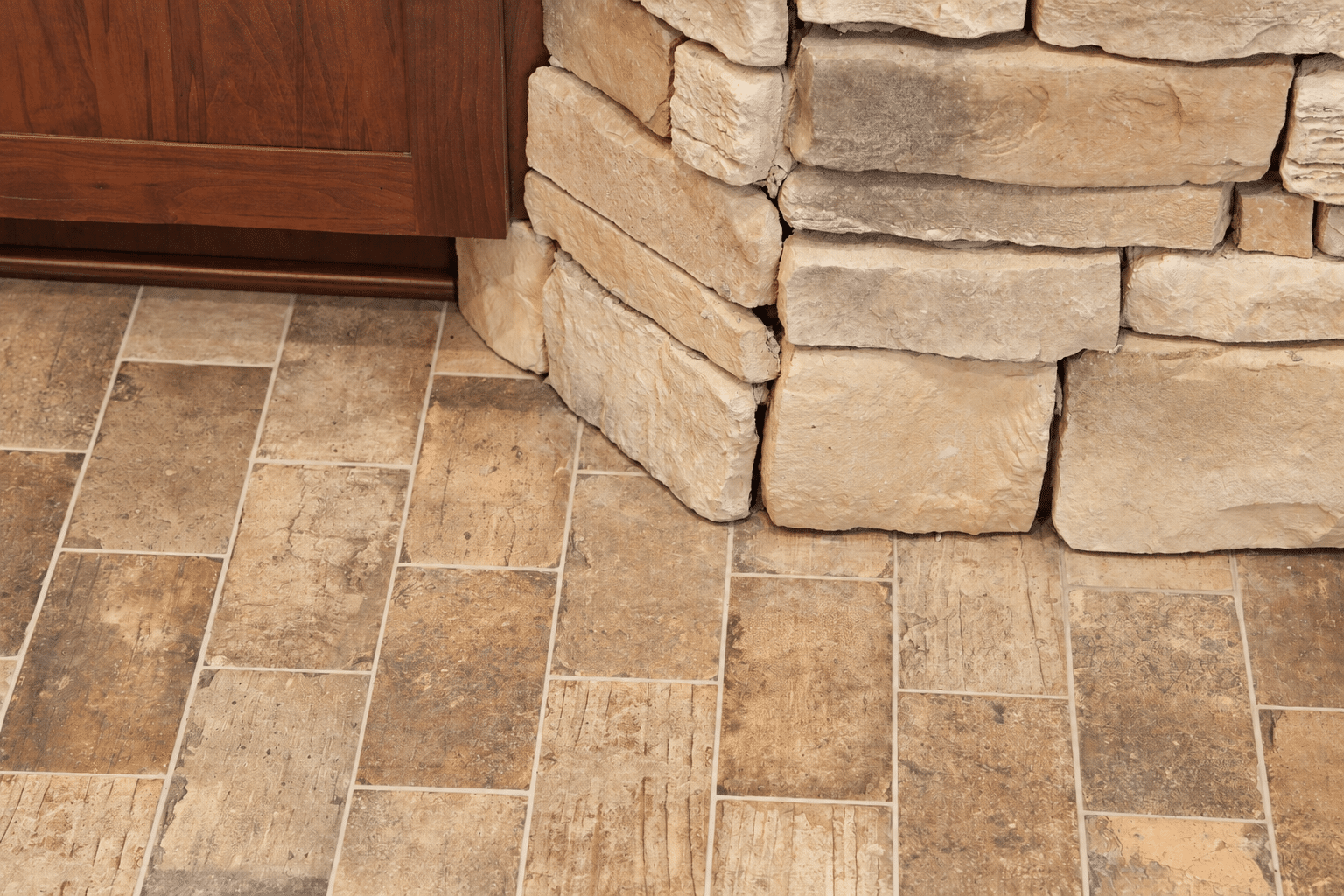
A sample shows color and texture. It does not show slab flatness, moisture conditions, door clearances, stair transitions, or the layers required below the finished floor.
Bring your room dimensions, photos, and any known water history to Dover Floor & Tile Center. The team will help you compare materials, review manufacturer guidelines specifications, and discuss installation needs before you commit. Walk-ins are welcome at the North Olmsted showroom, or call 440-423-TILE (8453) before your visit.
Frequently Asked Questions
What Is the Best Flooring for a Finished Basement?
Luxury vinyl, tile, and carpet can all work in a finished basement when the material suits the moisture conditions and intended use. Luxury vinyl often balances appearance, cleanup, and comfort. Tile can suit areas more likely to see surface water. Carpet adds warmth and sound control in a dry, managed space. The best choice comes after checking water history, slab condition, product requirements, and the room’s daily purpose.
Is Luxury Vinyl Plank Good for Basement Concrete?
Luxury vinyl plank can be a strong option over basement concrete if the exact product allows below-grade installation and the slab meets its flatness and moisture limits. The installer may need a vapor-control layer, patching, leveling, or another preparation step. An attached pad does not settle every moisture question. Also remember that a waterproof plank does not waterproof the room. Water can still reach edges, walls, or the space below the floor.
Is Carpet a Bad Choice for a Basement?
Carpet is not automatically a bad basement choice. In a dry basement with controlled humidity, it can add warmth, softness, and sound absorption. It becomes riskier when the room has a history of water entry or unresolved moisture. The carpet backing, pad, installation method, and ability to respond to a future water event all matter. If uncertainty remains, carpet tile or a hard-surface floor with removable area rugs may offer more flexibility.
Can Engineered Hardwood Be Installed in a Basement?
Some engineered hardwood can be installed below grade, but suitability depends on the exact product and the full installation system. The slab’s moisture level, subfloor, adhesive or floating method, and manufacturer requirements all need review. Engineered wood is more dimensionally stable than solid hardwood, yet it is still a wood product. Do not rely on the category name alone.